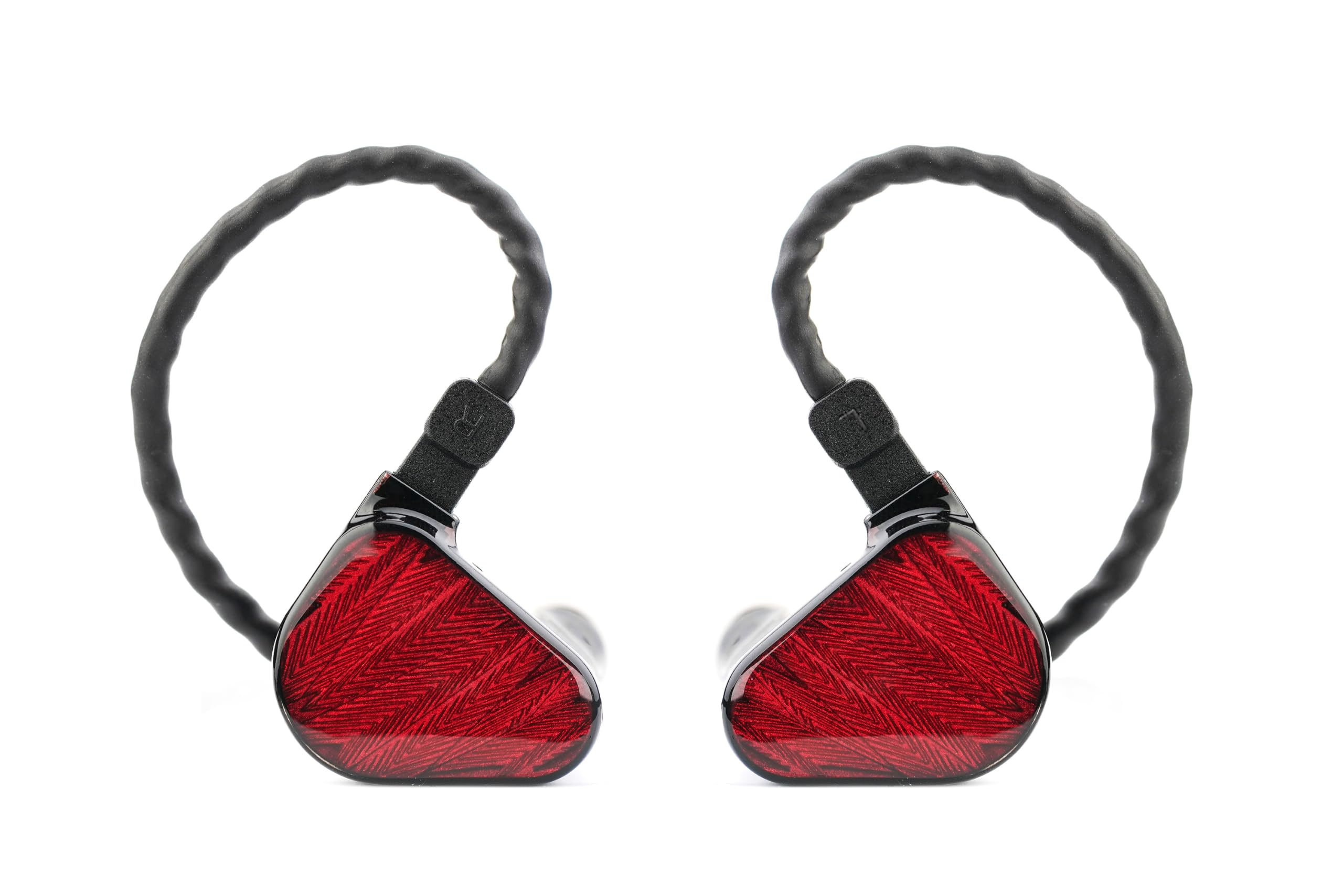
How to choose the right IEM
IEMs are easy to compare once you know which specs matter. If you are still deciding between IEMs and earbuds, read IEMs vs earbuds, and for how impedance affects your choice see headphone impedance explained. The six checks below cover tuning, cables, tips and how easy each pair is to drive.
Tuning
Makers describe their tuning in words such as neutral, warm or V-shaped, which is a claim, not a measurement. Neutral aims for an even balance, warm leans toward bass and lower mids, and V-shaped lifts both bass and treble. Pick the one that matches the music you play most. Check the frequency response column for the stated range.
Driver type
IEMs use dynamic drivers, balanced armature drivers or a mix of the two. The driver configuration column in the spec table lists which one a model has. More drivers do not guarantee better sound, so use the listing as a description of the design and read the maker's own notes on tuning. Driver type is one input to the sound, not a ranking.
Fit and included tips
A good seal changes bass and isolation more than most specs do. Look for several tip sizes in the box, and for more than one tip material if the listing says so. The tips included column tells you what comes with each pair. If the tip you need is missing, check that spare tips are easy to buy for that model.
Detachable cable connector
The two common connectors are 2-pin and MMCX. Check which one the IEM uses before you buy a spare cable, and check the plug size too: 3.5 mm suits phones and laptops, while 4.4 mm is for balanced outputs on some players and amps. Choose the connector first, because it limits the cables you can buy later and decides whether you can try a different plug.
Easy to drive
Low-impedance models of 16 to 32 Ω are designed for phones and laptops (beyerdynamic). Check the impedance and sensitivity columns. Our guide to headphone impedance explains how they work together.
Accessories and mic option
Check whether the box includes a case, a spare cable or a cable with a built-in microphone. If your phone has no headphone jack, see the DAC guide for how a dongle fits in. The mic option column says whether a model has a microphone, which matters if you want to take calls with them.